Rajasthan in 10 Days: The Grand Tour
Ten days is the magic number for Rajasthan: enough for the full pentagon — Pink City, holy lake, Blue City, golden desert, white lake city — including a night on the dunes, without the forced-march pacing that ruins the 7-day versions of this route. Here’s the itinerary we’d give a friend.
What ten days really buys you is the ability to afford Jaisalmer. Jaisalmer is a road dead-end: there is no onward loop, so whatever you spend getting out there you spend again coming back east. A week cannot absorb that, which is why our 7-day circuit deliberately leaves the desert out. Ten days can absorb it — you pay with one honest transit day, Day 8, and the rest of the trip stays civilised.
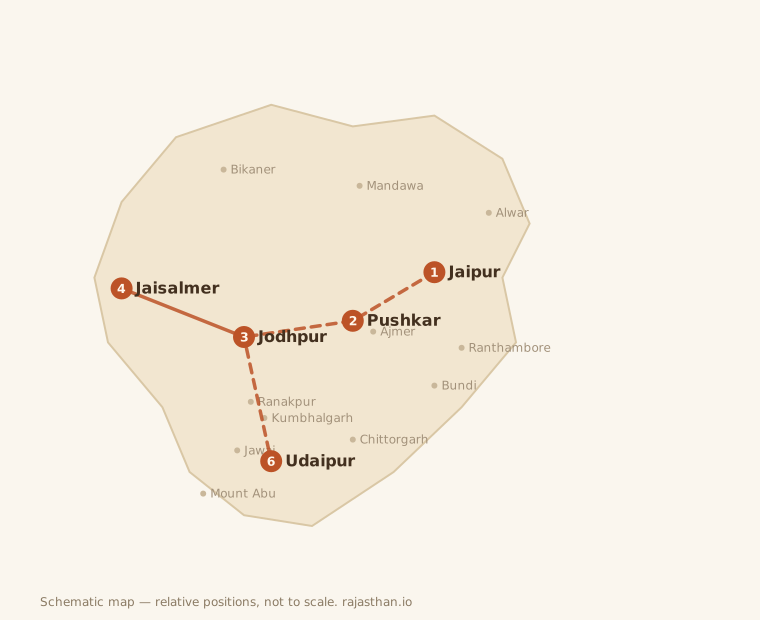
The shape of the tour
| Day | Where | Sleep in |
|---|---|---|
| 1 | Arrive Jaipur | Jaipur |
| 2 | Amber + Pink City | Jaipur |
| 3 | To Pushkar (3h) | Pushkar |
| 4 | To Jodhpur (3h) | Jodhpur |
| 5 | Mehrangarh + Blue City | Jodhpur |
| 6 | To Jaisalmer (5h), fort at sunset | Jaisalmer |
| 7 | Havelis + desert camp night | Thar dunes |
| 8 | Return, long drive or evening train toward Udaipur | (transit) |
| 9 | Udaipur: palace + lake | Udaipur |
| 10 | Kumbhalgarh day trip or slow morning, depart | Udaipur |
Read that column of beds carefully, because it is the itinerary’s actual argument: two-two-one-two-two, with a transit day in the hinge. Nowhere gets one night except Pushkar, which does not need two, and the desert, which is a single night by design. The route runs one way — east to west into the Thar, then a single long swing south — so you never retrace a road twice except the unavoidable stretch back out of Jaisalmer.
Days 1–5: the western build-up
These run exactly as in our 7-day circuit — Jaipur’s forts and bazaars (two nights), Pushkar’s ghats at dusk (one), then Jodhpur for Mehrangarh, the stepwell quarter and the Blue City (two). Steal the day-by-day detail from that route and from the 2-day Jaipur plan.
In brief: arrive Jaipur (the Delhi train takes ~4.5 hours and is the better arrival), give Day 2 to Amber Fort at opening and the City Palace in the afternoon, drive 3 hours to Pushkar on Day 3 for the Brahma Temple and the ghats at dusk, then 3 hours to Jodhpur on Day 4 with an afternoon at Toorji ka Jhalra. Day 5 is Mehrangarh all morning, Jaswant Thada after, Blue City lanes in the softening light and the clock-tower market at night.
The one change ten days makes to those five: you can slow Day 4 down. There is no need to be on the road by nine when the day after tomorrow is still only a five-hour drive.
Day 6 — West into the Thar
8:30–14:00 · Jodhpur to Jaisalmer, about 5 hours. The road is a mood in itself: scrub thins to sand, cattle give way to camels, and the villages get further apart until the horizon is doing all the work. The alternative is the train, 5–6 hours, which is comfortable and cheap but drops you at a station rather than at the fort — see the Jodhpur to Jaisalmer guide for the comparison.
15:00–17:30 · First look at Sonar Qila. Check in below the fort, then walk up through the gates. Unlike Jaipur’s or Jodhpur’s museum-forts, a quarter of the old city still lives inside these 99 bastions — houses, temples, shops and cows sharing lanes barely wide enough for a motorbike. The Jain temples inside are 12th–15th century and as finely carved as anything in the state; leather is refused at Jain temples, so leave the belt and camera strap behind.
17:30–19:00 · Sunset on the ramparts. The whole point of the name: the sandstone goes molten gold, then honey, then bronze. Find a west-facing bastion and stay put. Dinner afterwards on a rooftop in the town below, facing the lit citadel.
Day 7 — Havelis, then the dunes
7:30–8:30 · Gadisar Lake. Go at dawn, before the town wakes. The 14th-century reservoir kept this city alive for centuries and is ringed with small shrines and ghats; it is the closest Jaisalmer comes to serenity.
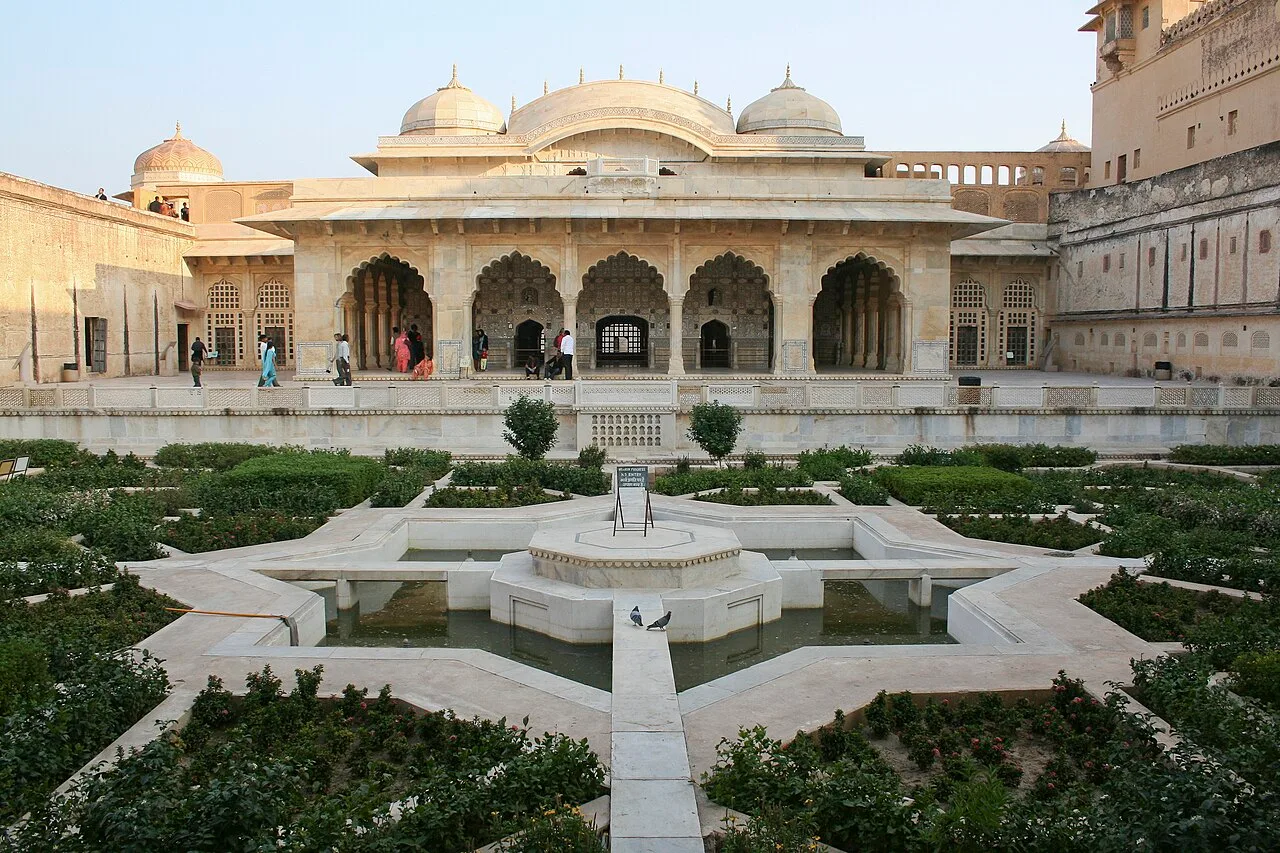
9:30–12:00 · The merchant havelis. Jaisalmer sat on the caravan route to Central Asia and its traders out-carved the royals. Patwon ki Haveli — five mansions in one lane — is the showpiece. Add Salim Singh ki Haveli, the peacock-roofed one, and Nathmal ki Haveli on an easy walking loop of about two hours.
12:00–15:00 · Lunch and shade. Shop the bazaar for mirror-work textiles if that appeals; otherwise be horizontal. The afternoon ahead is long.
15:30–17:00 · Out to the dunes. Sam is about 45 minutes west — bigger dunes, more camps, more people — while Khuri is quieter and more village-like. Choose your camp by its size, not its brochure: twenty tents means silence, two hundred means a buffet with a DJ.
17:00–18:30 · Camel to a dune crest for sunset. One hour on a camel is romance; three is a chiropractic event. Book the short ride and walk the last dune.
Evening · Camp night. Folk musicians, dinner, and a sky with actual stars in it. In December and January the Thar approaches freezing after dark — bring real layers, not optimism. Our Jaisalmer guide explains how to pick a camp, and the 3-day Jaisalmer itinerary is the longer version of these two days if you decide the desert deserves more.
Day 8 — The long pivot
The honest day. Jaisalmer is a beautiful dead end, and leaving it south means distance. Your options, best first:
- Drive Jaisalmer → Udaipur (~9h with stops) — long but entirely doable with a driver; break at Jodhpur for lunch and a leg-stretch. Leave the camp after sunrise, be on the road by 8:00, and arrive to Udaipur’s lights at dinnertime. You sleep in Udaipur and Day 9 starts fresh.
- Morning drive to Jodhpur, evening train or flight onward — splits the burden and buys a Jodhpur second-look afternoon (the market you rushed, the café at the stepwell). You sleep in Jodhpur or on the train, and Day 9 loses its morning.
Option 1 is what we would do, and the reason is Day 9: arriving the night before means the City Palace at opening rather than at noon. Whichever you choose, this is the day to accept that you are travelling, not sightseeing — load the audiobook, buy the water in Jaisalmer, and let it be what it is. Either way, Day 8 buys the two golden days that follow.
Day 9 — Udaipur
8:30–12:00 · City Palace. Four centuries of Mewar additions stacked on a ridge above the lake, and the route through climbs: mirror-and-glass chambers, the peacock mosaics of Mor Chowk, pierced-screen balconies, and views that improve on every level. Three hours, not one.
12:00–15:00 · Old-city lanes and lunch. Miniature-painting studios, silversmiths and rooftop tables between Jagdish Temple and Gangaur Ghat.
16:00–17:30 · The boat to Jag Mandir. The late departure from the palace jetty, an hour on the island, and a return cruise pointed at a sunset-gilded City Palace. This is the best hour in Udaipur.
19:00 · The Bagore ki Haveli dance show — book ahead, it sells out — or a lakeside dinner at Ambrai Ghat. Full logic in the 3-day Udaipur itinerary.
Day 10 — Choose your ending
- The big finish: the Kumbhalgarh + Ranakpur loop — the Aravalli day trip that outranks most headline sights (the guide). Run it fort-first: it is 2–2.5 hours up to Kumbhalgarh, then about 50 km and an hour and a half across to Ranakpur, which admits general visitors only after midday. Reverse it and you arrive at a closed door. This ending needs a late-evening flight, not an afternoon one — you will be back in Udaipur around 19:00.
- The soft landing: Ambrai Ghat in the morning light, Saheliyon ki Bari, a last look at the bazaar, and an afternoon departure from Udaipur’s airport.
If your flight is at midday, take the soft landing without guilt. A rushed Kumbhalgarh is worse than no Kumbhalgarh.
Where you sleep
- Jaipur, nights 1–2 — in or beside the old city. Walk to the bazaars in the evening; Bani Park and Civil Lines are the quieter garden-haveli alternative ten minutes out.
- Pushkar, night 3 — near the ghats. Four minutes to the water, temple bells for an alarm. Vegetarian, alcohol-free, and better for it.
- Jodhpur, nights 4–5 — the old city near the clock tower or Toorji ka Jhalra. A rooftop facing the floodlit fort is the standard product here, not a splurge.
- Jaisalmer, night 6 — in the town below the fort, not inside it. The fort’s medieval drainage was never built for modern water use and seepage is damaging its foundations; many travellers now sleep in the havelis below and visit by day. The views of the fort are better from outside anyway.
- The dunes, night 7 — a small camp at Sam or Khuri. Ask how many tents before you ask anything else.
- Night 8 — Udaipur if you drove through, Jodhpur if you split the day.
- Udaipur, nights 9–10 — Lal Ghat or Hanuman Ghat. East bank for the palace gate, west bank across the footbridge for the better view of it. Book the lake-view room first; with the desert camp, it is one of the two beds on this route that genuinely sells out.
What to cut, what to add
Nine days instead of ten? Cut Day 10’s day trip, not a night. You end with a slow Udaipur morning and lose nothing structural. Cutting a Jodhpur or Jaipur night instead unbalances everything downstream.
Eight days? Then it is not this itinerary. Drop the desert entirely and run the 7-day circuit with a spare day in Udaipur — a half-hearted Jaisalmer is the worst version of this trip.
Twelve days? Two good additions. Bikaner re-routes the northern half sensibly: Pushkar → Bikaner → Jaisalmer, approaching the desert from the north on a comparable five-to-six-hour drive and returning via Jodhpur, which converts some of the dead-end mileage into new road. See the Bikaner guide. Or add Mount Abu between the Jodhpur return and Udaipur for the Dilwara temples (why) — or simply slow down. Rajasthan rewards the unhurried.
Common mistakes
- Running the route in reverse, Udaipur first. You then face the Jaisalmer dead-end at the end of the trip and finish with a 9-hour drive to a Jaipur departure. Go west first, south second.
- One-nighting the desert. Arriving at a camp in the dark and leaving after breakfast means you paid for a bed, not for the Thar. The dune sunset and the sunrise are the whole product.
- Booking the biggest, cheapest camp. Two hundred tents with amplified music is a wedding, not a desert night.
- Treating Day 8 as a sightseeing day. People try to add Osian or a fort stop to a nine-hour drive and arrive in Udaipur at midnight, exhausted, with Day 9 already compromised.
- Running Day 10’s loop Ranakpur-first. The temple does not admit general visitors before midday. Fort first, always.
- Packing for heat only. The Thar in December and January is close to freezing at night, and Udaipur’s boat is cold after dark in January. See the packing list.
- Booking a 14:00 flight out of Udaipur on Day 10 and still planning Kumbhalgarh. Pick one.
Season and pacing notes
- Two nights minimum in Jaipur, Jodhpur and Udaipur; never one-night the desert. The route’s rhythm is two-two-one-two-two with a transit day.
- Book the Jaisalmer camp and the Udaipur lake-view room first — the two beds that sell out.
- October to February is the window. December and January are the coldest desert nights of the year and the busiest weeks in Udaipur; book weeks ahead. March warms the Thar fast, and by April the desert night has stopped being the reason you came — Jaisalmer in May reaches 45 °C and no itinerary rescues that. If you must travel in the hot months, run the 7-day circuit instead and skip the dunes altogether.
- Monsoon, July to September, is quiet, cheap and surprisingly good in the south — the Aravalli roads around Ranakpur are at their best — while the desert half is hot and sticky rather than dramatic. Details in the best time to visit guide.
Questions people actually ask
Can I fly out of Jaisalmer and skip Day 8? Sometimes. Jaisalmer has a small airport with seasonal winter services, and schedules change year to year — check before you build the trip around it. If a flight exists on your dates it converts the pivot day into a half-day and gives you a bonus afternoon in Udaipur.
Train or car for Jodhpur to Jaisalmer? The train takes 5–6 hours and is comfortable; the drive takes about 5 and lets you stop. Take the train if you are travelling light and want the experience, the car if you have luggage, children, or a driver already booked for the circuit.
Is the camel ride compulsory? No, and plenty of people prefer a jeep to the dune crest and a walk from there. The camel is one hour of novelty; the reason to be out there is the sunset, the silence and the sky.
Could I do this with two people and no driver? You could self-drive, but almost nobody does, and the Day 8 haul is the reason why. A car and driver for the whole circuit is standard practice here, priced per kilometre and day, and it is what makes a nine-hour transit survivable.