Mount Abu: Rajasthan's Only Hill Station
Mount Abu breaks every Rajasthan rule: it’s green, it’s cool, there’s a lake you pedal-boat on, and the headline attraction is not a fort. Perched at ~1,200 m in the Aravallis near the Gujarat border, the state’s only hill station is really two destinations — an old-fashioned Indian holiday town, and one transcendent artistic monument that justifies the whole climb.
It is important to be clear about which of those two you are coming for, because they attract completely different crowds and reward completely different amounts of time. Dilwara is a world-class monument that most foreign itineraries skip. The town around it is a domestic holiday resort — corn on the cob, boating, honeymoon couples, coach parties from Gujarat — and it is charming on its own terms and nothing like the Rajasthan you came for.
Dilwara: the reason to come
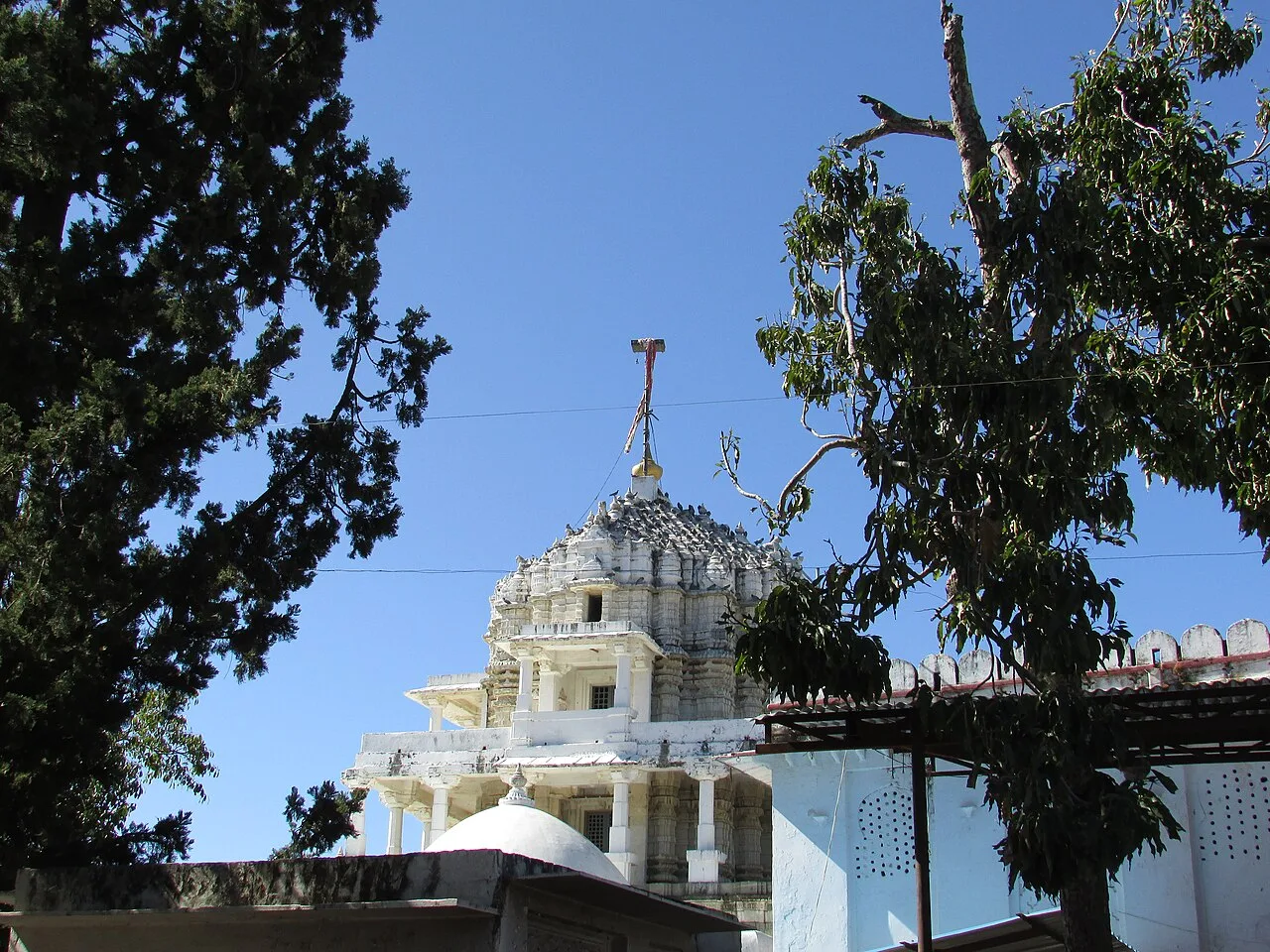
The Dilwara Jain temples (11th–13th century) contain, by wide consensus, the finest marble carving in India — ceilings, pillars and domes worked to a translucent lace that seems impossible in stone. The Vimal Vasahi and Luna Vasahi temples are the masterpieces; the marble lotus pendant in the latter’s dome looks carved from frost.
What you are actually looking at
There are five temples in the walled complex, and they are not equal. Know which two matter and you’ll spend your time well.
| Temple | Date | Why it matters |
|---|---|---|
| Vimal Vasahi | 1031 | The oldest and, for many, the greatest. Dedicated to Adinath. The Rang Mandap dome, worked in concentric bands of dancers and musicians, is the single most extraordinary ceiling in the complex. Don’t miss the elephant hall at the entrance. |
| Luna Vasahi | 1230 | Built by the brothers Vastupal and Tejpal. The central dome’s carved lotus pendant is the celebrated piece; the paired niches donated by the brothers’ wives are the human detail people remember. |
| Pittalhar | 15th c. | Named for its heavy metal image of Adinath. Unfinished, and interesting mostly by contrast. |
| Parshvanath | 15th c. | The tallest building here, with grey sandstone carving on the outer walls. Ten minutes. |
| Mahavir Swami | 1582 | Small, late, with painted upper walls. Five minutes. |
Give the complex ninety minutes to two hours. Vimal Vasahi and Luna Vasahi deserve an hour between them, and the honest advice is to stand still and look up — the ceilings carry the work, and everyone who walks around at eye level misses the point. Local tradition holds that the carvers were paid by the weight of marble dust they removed, which is almost certainly a story rather than a record, but it is the right story: the surfaces are undercut until the stone reads as thread.
The rules, which are enforced
Plan the day around these rather than discovering them at the gate:
- Tourist visiting hours begin after noon. Mornings are reserved for worship. Arriving at ten means waiting outside for two hours.
- Photography is prohibited, throughout, including phones. Leave the camera in the car; bags are checked.
- Leather items are refused — belts, wallets, bags, watch and camera straps. This applies at Jain temples generally, Ranakpur included, so it is worth packing a non-leather belt for the trip.
- Modest dress. Shoulders and knees covered; shorts get turned away.
- Shoes come off outside, and the complex posts its own further conditions of entry at the gate, including a customary restriction on menstruating women. They are observed.
Entry is free. Guides at the entrance are inexpensive and genuinely improve the visit — the iconography of the Tirthankaras, the donor portraits and the narrative bands reward explanation, and without one you will admire the craftsmanship without understanding a single scene.
The holiday town
- Nakki Lake — the town’s social heart: pedal boats, ice cream, the evening promenade. Toad Rock, the granite outcrop above, is a fun fifteen-minute scramble with lake views. The name comes from a legend that the basin was gouged out by fingernails (nakh); on the shore, Gandhi Ghat marks where a portion of Gandhi’s ashes was immersed.
- Sunset Point — exactly what it says, with a carnival of snack vendors. Go once; it’s the town at its most cheerfully Indian. Expect a crowd, a queue of hand-pushed carts for anyone who’d rather not walk the last stretch, and a collective cheer when the sun goes.
- Guru Shikhar — the highest point of the Aravallis (1,722 m), a short drive out, with the Dattatreya shrine and a horizon that runs from Rajasthan haze to Gujarat plain. A flight of steps at the top, an old bell worth ringing, and — incongruously — an astronomical observatory on the next summit.
- Achalgarh — a medieval fort ruin and Shiva temple pairing on the same excursion road; modest, atmospheric, uncrowded. The Achaleshwar Mahadev temple enshrines what devotees revere as an impression of Shiva’s toe rather than the usual lingam, and the tank outside holds three stone buffaloes and an archer from a local legend. Worth the twenty minutes.
- Adhar Devi — a goddess shrine reached through a cleft in the rock at the top of a few hundred steps. Steep, popular with pilgrims, good views. Skip if your knees are already complaining after Dilwara.
Two more things shape the town. The Brahma Kumaris spiritual organisation has its world headquarters here, which explains the meditation centres, the peace-park signage and a certain proportion of the visitors. And Mount Abu sits just over the border from dry Gujarat, which explains a great deal about why the town is as busy as it is on long weekends.
If you want a walk rather than a viewpoint, the Mount Abu Wildlife Sanctuary covers the plateau around the town — sloth bears, leopards that you will not see, and Trevor’s Tank, a colonial-era water body that is a genuinely good spot for birds early in the morning.
What to eat
This is not a food destination and pretending otherwise would be dishonest. What it does have is a Gujarati holiday palate: unlimited thalis served fast and sweet-leaning, street bhutta (charred corn rubbed with lime and chilli) around Nakki Lake at dusk, and more ice cream per square metre than anywhere else in Rajasthan. Restaurants near Dilwara are strictly vegetarian. Eat the thali, walk the lake with the corn, and save your appetite for Udaipur.
How long?
Arrive by lunch, Dilwara in the afternoon (remember: opens to visitors after noon), lake promenade at dusk. Next morning Guru Shikhar and Achalgarh, then descend. That’s the complete, unhurried version — one night, two days.
Hour by hour, that looks like:
- 12:30 — Arrive, check in, quick lunch. Leave leather and cameras in the room.
- 14:00 — Dilwara, unhurried, with a guide.
- 16:00 — Back to town. Tea, and the walk up to Toad Rock.
- 17:30 — Sunset Point, or the lakeside if you’d rather avoid the scrum.
- 19:00 — Nakki Lake promenade, corn, the evening crowd.
- 07:30 (day two) — Drive out to Guru Shikhar early, before the haze and the coaches.
- 09:00 — Achalgarh on the way back down the same road.
- 10:30 — Nakki Lake boating if you have children, or the sanctuary road if you don’t.
- 12:00 — Descend to Abu Road or drive on.
Who should come?
Honest answer: travellers with 10+ days, road-trippers linking Udaipur to Gujarat, and anyone visiting in the hot months — in April–June, when the plains bake at 45 °C, Abu’s 30-ish degrees explain the town’s entire existence. On a first, tight 7-day fort circuit, Mount Abu is the right thing to cut — Dilwara hurts to miss, but Udaipur–Jodhpur–Jaisalmer hurt more.
Come if: marble carving and religious architecture are why you travel; you are continuing into Gujarat; you are travelling with children who need a day that isn’t another fort; or it is May and you want to be able to think.
Don’t come if: you have a week and haven’t seen Jaisalmer; you want the desert Rajasthan of photographs; or you are expecting a hill station in the Himalayan sense. Abu is a plateau town with a lake and a view, not an alpine one.
How it fits your route
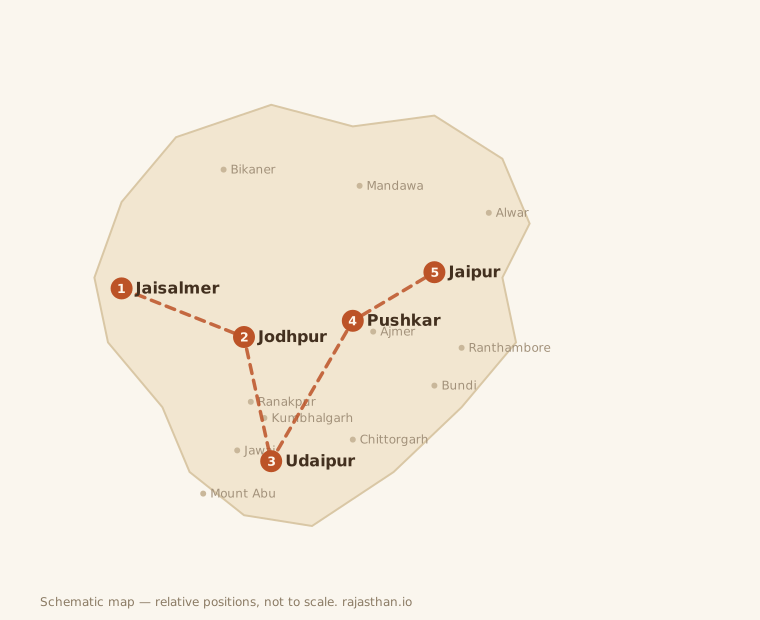
From Udaipur it’s a scenic ~3-hour drive (165 km), making a 1-night detour practical; the nearest railhead is Abu Road, 28 km below on the plains, on the main Delhi–Ahmedabad line.
That geography is the whole argument. Mount Abu sits in the state’s far south-west corner, off every classic circuit, which means it is never on the way to anywhere in Rajasthan — with one exception.
- The Udaipur out-and-back. Three hours each way from Udaipur, one night on the hill. The cleanest way to do it, and the version that fits a 10-day route.
- The Gujarat exit. If you are ending in Ahmedabad rather than looping back to Delhi, Mount Abu is genuinely en route and costs you almost nothing. This is the exception, and it is the best reason to go.
- Towards Jodhpur. Around five hours north, and a long, dull drive. If you are heading that way anyway, break it at Ranakpur — remembering that Ranakpur, like Dilwara, admits general visitors only after midday, so two Jain temples in one day does not work.
- Not from Jaipur or Jaisalmer. Both are a full day’s travel away. Mount Abu on a 7-day route means cutting something better.
Common mistakes
- Arriving at Dilwara in the morning. The single most common wasted half-day in southern Rajasthan. Tourists are admitted only after noon.
- Bringing a leather belt or camera bag. You’ll be sent back to the car park. See the packing list — a fabric belt solves this for the whole trip.
- Trying to pair Dilwara and Ranakpur on the same day. Both open to visitors after midday, and they are hours apart.
- Coming for the hill station and being disappointed. Abu’s altitude buys you comfortable air, not drama. Come for Dilwara; treat the rest as a bonus.
- Booking last minute in May, June or Diwali week. This is peak domestic season and the town fills completely.
- Under-dressing for winter nights. Mount Abu regularly records the coldest temperatures in Rajasthan in December and January, occasionally at freezing.
Where to stay
Almost everything clusters within walking distance of Nakki Lake, and that is where you want to be — the lake road, the market and the restaurants are all there, and the evening promenade is the town’s best hour. Rooms directly on the lake charge for the view and are noisy on holiday weekends.
The Dilwara road has a quieter set of properties, useful if you want an early start and don’t care about the promenade. Out on the Achalgarh and sanctuary roads are the old colonial-era bungalows and heritage properties, several of them former princely summer houses, set in gardens with real silence — the right choice if you have a car and want the hill rather than the town. Do not book down at Abu Road; it is a railway junction on the plains, 28 km and a winding hour below everything you came to see.
Getting there and around
Abu Road station is the railhead, well served on the Delhi–Ahmedabad main line, with taxis and shared jeeps making the climb. Udaipur has the nearest useful airport at about three hours. By road: Udaipur ~3 hours, Ahmedabad four to five, Jodhpur about five.
In town, everything central is walkable and the lake circuit is the main promenade. For Guru Shikhar, Achalgarh and Adhar Devi you need wheels — shared jeeps run the excursion loop, and a half-day taxi covering all three is the efficient version. See getting around Rajasthan for how the longer legs work.
When to come
Abu works year-round — that’s its trick. Sept–March is crisp and clear; summer is its high season for domestic tourism (book ahead); monsoon wraps the hill in mist and green, gorgeous if you don’t mind soft views.
The counter-intuitive part is that Mount Abu’s busiest season is exactly when the rest of Rajasthan empties out. April to June is when Indian families come up the hill to escape the plains, so hotels are fullest and priciest in the months you would otherwise have the state to yourself. If you want Dilwara quiet, come on a weekday in February. The best time to visit Rajasthan guide has the rest of the calendar.
Questions people actually ask
Is Mount Abu worth the detour from Udaipur? If you have ten days or more, yes — Dilwara is one of the two or three finest pieces of craftsmanship in India and there is nothing comparable elsewhere on a Rajasthan trip. On seven days, no. Spend the night in Udaipur or Jaisalmer instead.
Can I do Mount Abu as a day trip from Udaipur? Technically, and it’s a bad idea. Three hours each way plus a Dilwara opening time of midday means you’d arrive, rush the temples, and drive back in the dark on a hill road. Stay the night.
Why can’t I photograph Dilwara? It is an active place of worship and the trust that maintains it prohibits photography throughout, phones included. This is enforced at the gate rather than negotiated inside. Buy a book at the entrance if you want images.
Is one night enough? Yes. One night and two half-days covers Dilwara properly, the lake at dusk, and the Guru Shikhar–Achalgarh loop the next morning. A second night only makes sense if you want the sanctuary walks or you are hiding from the summer.