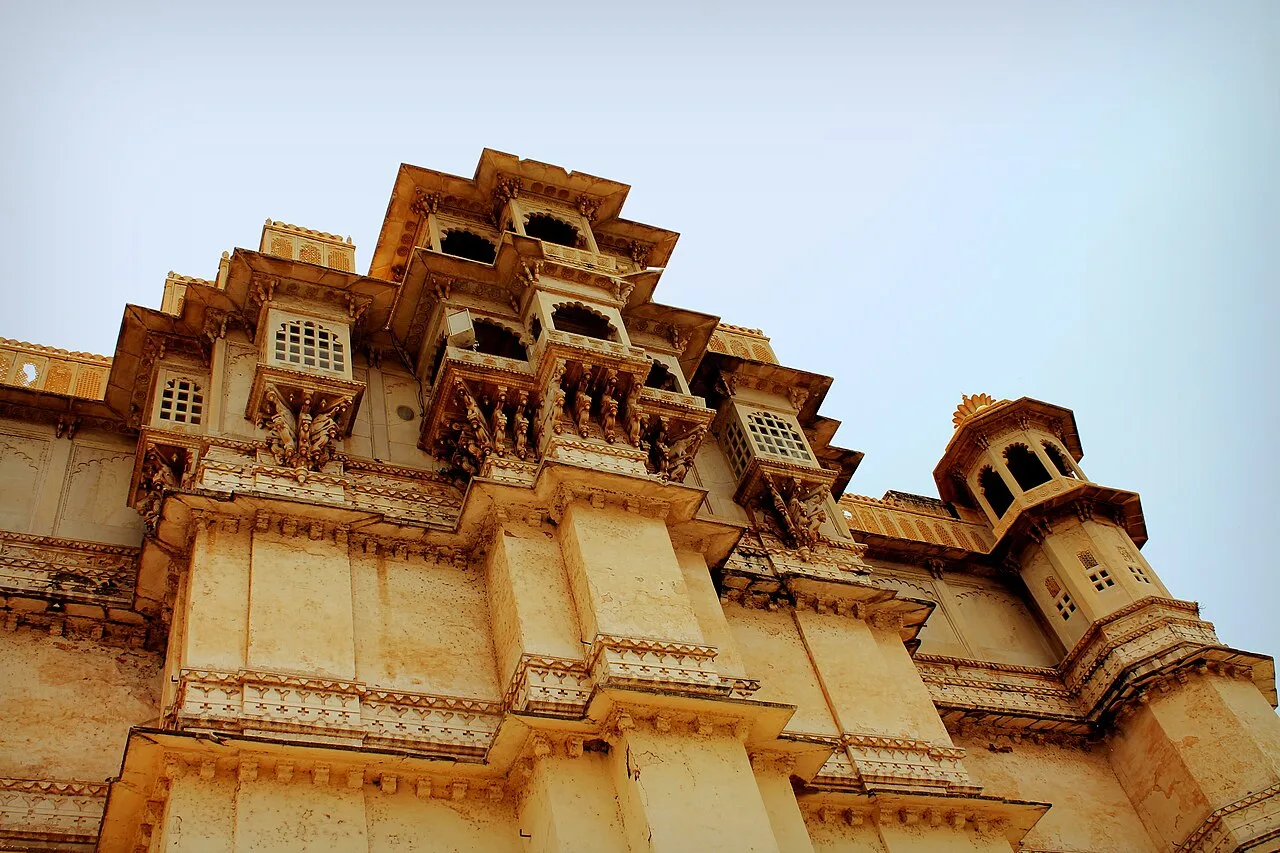
Udaipur to Kumbhalgarh: The Perfect Day Trip
Ask travellers their favorite day in Rajasthan and a surprising number name this one: the loop from Udaipur into the Aravallis to Kumbhalgarh — the fortress whose 36 km wall is popularly called the Great Wall of India — paired with Ranakpur, a marble Jain temple of 1,444 pillars, no two alike. It’s about 200 km of winding hill country round-trip, and with the timing below it fits into one glorious day.
The one rule that decides your day
Before anything else: Ranakpur admits general visitors only after midday. Mornings belong to worship, and no amount of good intent at the gate changes that. Everything else about this trip — when you leave Udaipur, how long you linger at the fort, when you eat — follows from that single fact.
So the loop runs Kumbhalgarh first, Ranakpur second. Drivers who do this route weekly know it; drivers who don’t sometimes propose the reverse because Ranakpur is marginally closer to Udaipur. Say no. Running it backwards is the most common way this day gets ruined, and it is unrecoverable once you’re standing outside a closed temple at 10 am with a two-hour drive behind you.
The two stars
Kumbhalgarh Fort
~84 km from Udaipur, 2–2.5 hours. Built in the 15th century by Rana Kumbha, the Mewar ruler whose reign produced a string of hill fortresses, it crowns a ridge at around 1,100 m with a wall that snakes over the skyline beyond every horizon you can find. That wall is the reason people come: it runs roughly 36 km around the hilltops, thick enough along stretches for several riders abreast, and from the upper terraces you can trace it climbing and dropping across three or four ridgelines before it disappears.
It is a UNESCO World Heritage site as one of the Hill Forts of Rajasthan, and it is also the birthplace of Maharana Pratap, born here in 1540 — the ruler who spent his life refusing to submit to Mughal authority, and the single most revered figure in Mewar’s history. That fact alone draws Indian visitors who would otherwise skip a ruined fort, and it is worth knowing why the place feels reverent rather than merely touristic.
The fort’s defensive record explains its reputation. It was never taken by direct assault in its prime; the one occasion it fell, to a combined force under Akbar’s commanders in the 1570s, the attackers went after its water supply rather than its walls. Rana Kumbha himself was assassinated here by his own son.
Inside the ramparts is essentially a lost town. Several hundred temple ruins stand within the enclosure — most silent and unlabelled, some genuinely lovely, the largest being the Neelkanth Mahadev temple with its tall Shiva lingam under an open colonnade. You enter through a sequence of fortified gateways, Ram Pol being the main one, and the approach is a switchbacking climb in itself.
The summit palace is Badal Mahal, the “cloud palace” — pale, oddly domestic pastel rooms perched at the very top, added long after the fort’s military years. Getting there is 30–40 minutes of steps at altitude: manageable for most reasonably mobile visitors, sweaty for all of them, and not something to attempt in the middle of a hot afternoon. The Aravalli panorama from the top is the payoff, and it explains why nobody managed to take this place by force. Allow 2.5–3 hours including the climb.
Ranakpur Jain Temple
~50 km / 1.5 hours from Kumbhalgarh through the hills. In a wooded valley below the range sits the 15th-century Chaumukha (“four-faced”) temple to Adinatha, the first tirthankara — commissioned by the merchant Dharna Shah with Rana Kumbha’s patronage, which ties both halves of this day to the same era and the same court.
The exterior is handsome. The interior is something else. You step out of hard sunlight into a forest of 1,444 marble columns, no two carved alike, holding up around 80 domes across nearly thirty halls. Nothing is straight-line: sightlines open and close as you move, and the four identical entrances mean you lose your bearings almost immediately, which is the point. The marble is pale and slightly translucent, so the light shifts through the lattice screens all day — cool and diffuse in the early afternoon, warmer and more directional by four, gold across the western halls before closing. Photographers should plan for the late slot; anyone who simply wants the space quiet should aim for the first hour after opening.
Look for the carved ceiling rosettes, the nested marble tiers of the Sahasrakoot, and — in the smaller Parshvanath temple nearby — the famous sculpture of a figure ringed by a thousand snake heads. Allow 1.5 hours, and take the audio guide; the building rewards being explained.
Temple etiquette matters here and is enforced. Dress modestly, shoulders and knees covered. Shoes come off. Leather is refused at the gate — belts, wallets, bags and camera straps included, so leave them in the car rather than arguing at the entrance. Photography requires a separate fee ticket, and the posted rules at the entrance also ask women not to enter during menstruation. This is an active place of worship first and a monument second; the deeper background is in our Ranakpur temple guide.
The drive itself
Half the pleasure of this day is the road. Out of Udaipur you climb steadily north-west through the Aravallis on a good but continuously winding two-lane road: terraced fields stacked up the valley sides, langurs on the parapets, marble quarries, camel carts, and villages where the road is also the market. The Kumbhalgarh approach is the steepest stretch, a series of tight switchbacks up the ridge.
The Kumbhalgarh–Ranakpur leg is the prettiest and the slowest — 50 km that takes a full 90 minutes through forest inside the Kumbhalgarh Wildlife Sanctuary. The return from Ranakpur to Udaipur is a different character entirely: about 90 km, much of it fast highway, which is why the evening leg takes less time than the morning one despite being longer.
If anyone in the car is prone to motion sickness, this is a day to medicate for in advance. And if you have a choice of seats, the front one is worth having.
The timing that makes it work
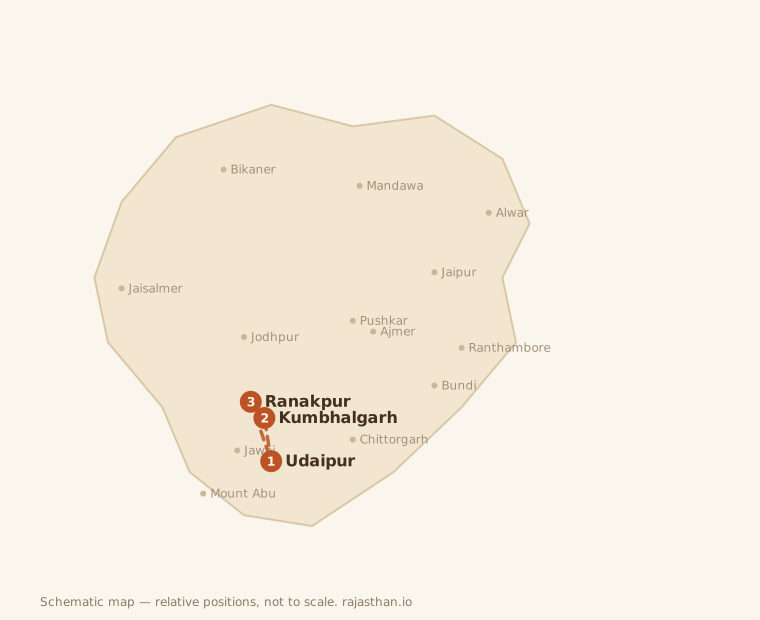
| Time | Where |
|---|---|
| 8:00 | Leave Udaipur (earlier in summer) |
| 10:15–13:00 | Kumbhalgarh: walls, Badal Mahal climb, temple ruins |
| 13:00–14:30 | Drive to Ranakpur via the hill road; lunch en route or at the temple-adjacent restaurants |
| 14:30–16:00 | Ranakpur temple |
| 16:00–19:00 | Return to Udaipur (~90 km, much of it highway) |
You’re back for a rooftop dinner. Run it in reverse and you’ll hit Ranakpur’s closed-morning wall — the single most common mistake on this trip.
Two adjustments worth making. In summer, shift everything an hour earlier so the Badal Mahal climb happens before the heat sets in. In deep winter, when dark falls before six, an 8 am departure still works but leaves no slack — trim the fort to two hours rather than shortening Ranakpur, which has a firm closing time.
How to travel
Car and driver is the way — this is standard practice, arranged through your hotel or any operator, priced for the round trip. The hill roads are winding but good; the scenery (step-farmed valleys, langurs, the occasional camel cart) is half the day’s pleasure. Buses exist but their schedules devour the day; self-driving is for the experienced-in-India only.
When you book, confirm three things explicitly: that the day is quoted as a full round trip with waiting time included, that the driver understands the Kumbhalgarh-first order, and roughly what time you expect to be back. Drivers paid by the trip rather than the hour occasionally try to compress the fort visit; agreeing the shape of the day at 8 am prevents that conversation at noon.
The overnight variant
If you can spare a night, the trip changes character completely. Sleeping near Kumbhalgarh lets you catch the fort’s evening light-and-sound show, which runs after dark and turns the ramparts into a screen for the Mewar story — worth staying for, and impossible on a day trip because you’d be driving back in the dark. The next morning you can walk a stretch of the great wall at sunrise, with the valleys still full of mist and nobody else there, then do Ranakpur at midday and reach Udaipur by mid-afternoon.
The area has good heritage properties and jungle lodges on the sanctuary fringe, which are pleasant places to be in a way that a rushed lunch stop isn’t. This variant also suits anyone coming from Jodhpur rather than looping out of Udaipur, since Ranakpur sits close to that road.
Extending into Jawai leopard country
South-west of Ranakpur, roughly two hours on, the granite hills around Jawai hold one of India’s most reliable leopard populations — animals that den in the boulder caves and coexist with the Rabari herders whose livestock share the same hills. Morning and evening jeep safaris are the draw, and sighting rates are high by big-cat standards.
It doesn’t fit into the day loop, but it slots neatly onto the end of the overnight variant: Kumbhalgarh, Ranakpur, then one or two nights at Jawai before returning to Udaipur or continuing to Jodhpur. Leopard safaris in the Kumbhalgarh sanctuary itself are a growing draw too, though Jawai is the stronger bet.
Worth knowing
- The wall walk: you can walk sections of the great wall near the main gate — twenty minutes out along the ramparts gives you the classic serpentine views without a trek.
- Weather: the hills run a few degrees cooler than Udaipur; winter mornings are crisp, monsoon turns everything extravagantly green (and occasionally misty enough to hide the panorama — check the forecast, and see the seasonal guide).
- Tickets: Kumbhalgarh entry is straightforward at the gate; carry cash for small fees and the Ranakpur camera ticket.
- Fit: Badal Mahal’s climb is 30–40 minutes of steps at altitude — manageable for most, sweaty for all.
- Food: options on the route are limited and simple. The restaurants near the Ranakpur temple complex are the reliable stop, and there is a Jain tradition of hospitality there worth experiencing.
- Shade and water: neither site has much of the former. Carry more of the latter than you think you need, plus a hat, and remember there is no shop once you’re inside Kumbhalgarh’s walls.
Fitting it into your trip
This loop is Day 3 of our 3-day Udaipur itinerary and the recommended finale of the 10-day Rajasthan route. If you’re driving Jodhpur → Udaipur, note that Ranakpur sits near that road — the 7-day circuit captures it in transit, freeing your Udaipur day for Kumbhalgarh alone. That’s the efficient version; the full loop is the better day.